Showing posts with label developing countries. Show all posts

Sunday, March 21, 2010

The Galileoscope: The BEST Telescope Deal EVER!


If you love star-gazing and have been waiting for a super deal to buy a telescope, well, here's your chance. Its called the Galileoscope. I swear it will change astronomy for the developing world...

I just found out about it (thanks Adam!) and ordered mine just now, so I thought I would share my enthusiasm with you all, in case you don't already know about it.

What is it? Well, its a high-quality, low-cost ($30!!) telescope kit developed for the International Year of Astronomy 2009 by a team of leading astronomers, optical engineers, and science educators.

Why is it important? Well, the telescope changed everything!! Galileo's discoveries literally revolutionized our perception of the universe and Earth's place in it.

But not everyone has a telescope, especially in less developed parts of the world. To enable more people in more places to personally experience the wonders of the universe, these guys developed a remarkably inexpensive, very-high-quality, easy-to-use refractor. With this new instrument, called the Galileoscope, children and adults can learn how telescopes work and repeat for themselves the spectacular observations made by Galileo beginning in 1609.

So the Galileoscope is much more than a telescope - it's a strategic initiative to improve math, science, and technology literacy worldwide. With this easy-to-assemble kit, anyone can explore how optics work and then they can go outside at night to observe the celestial wonders first glimpsed by Galileo four hundred and one years ago!

Think of it as a "one-telescope-per-child" kind of project.

You can find out more about the project on it's website:
https://www.galileoscope.org/gs/


For proof, here's a happy Galileoscope owner (soon to be me!)

Monday, September 21, 2009

Lessons from my trip

I'm back from my trip. I think everyone should take some time off and do something for themselves. This long-ish break was a b'day present to myself, and I enjoyed it thoroughly. I love traveling. There is SO much to be said for the education one receives while on their travels.

There is also a level of appreciation I feel for being back in the US (of course, the in-your-face advertising, and constant level of activity here quickly drained that out). Its nice to finally be in a place where I am understood immediately, rather than the wild gesturing and slow, repetitive speaking I've had to do. Where I can browse the magazines and books, and instantly understand what is written. And I like that everything generally works efficiently, sometimes 24 hours a day. But I do miss the European way of life; there is a tremendous emphasis on living well and a little more respect for human life there. People take care of themselves there, something that is completely missing here. Salaries aren't high there, but people seem SO much happier...continually reinforcing my belief that life isn't about money.

I generally have 3 rules when I am out traveling:
  • Eat locally.
  • Limit gadget use to 10-30 mins per day (I stick to the lower end usually).
  • Use as much public transit, and walk as much as possible.
This allows me to be quite away from my life at home (a true vacation), and be fully immersed in another culture. This is how my greatest learning happens.

From a "Tworque" point-of-view, most of my education came from understanding the points-of-view of colonial powers. I am continually curious about what prompted Colonization, their later cessation, and generally where these "Powers" are now as a result of their past actions. Are they really better off?? How do the citizens feel about their past? And where did their methods of governance come from. Being the product of a former colony myself, has allowed me a great understanding of why my country is the way it is. It also allows me to forgive and move on, and figure out the best way to deal with the current situation. 

Of all the places I visited this time (France, Belgium, Switzerland, and Germany), Belgium was the most fascinating. 

Belgium is utter chaos now. And I was shocked that such a small and chaotic country could have have colonized a significant part of Africa. Probably not so surprisingly, looking at Belgium today reinforced the fact that chaotic colonizers tend to transfer their chaos to their colonies (Portugal is another perfect example of this). No wonder former Belgian African colonies are still in a state of extreme and violent chaos (Rwanda, Central African Republic, and Congo).  I would highly recommend reading the book "King Leopold's Ghost" further on this subject. 

Knowing England, France, Portugal, and Belgium as I do now, I'm glad I came out of a former British colony. I can honestly say that their high-nosedness, and class-based governance combined with their interest in advanced science, technology and education (ironically) created better colonies than any others. If you look at colonies that have best survived the tests of time, former British Colonies are probably most stable.  Of course there are exceptions, and I want to make it clear that colonization, British or otherwise, did TERRIBLE, terrible things. I do not sanction the act at all, but it did happen, and it sometimes needs to be analyzed at a distance.

Finally, its a pleasant change to finally have people think positively of the US. Obama has significantly "upped the ante." The past eight years were a particularly miserable time to be traveling around. I heard every kind of anti-American sentiment (quite rightly so) when I was out-and-about, particularly in the developing world. But it does get tiring, and it is SO refreshing to not have to deal with it any more.

Tuesday, July 21, 2009

Thwarting Terrorism


The Taj Mahal Hotel in Mumbai, during the 26/11/08 attacks. photo courtesy: computerweekly.com

What is the best way to thwart terrorism?? Well, how about we start with where and how a regular person becomes a terrorist...

I was reading this article about Ajmal Kasab the 21-y/o sole surviving terrorist from the Mumbai Attacks on 26/11. He was recently arraigned in court, and strong international interest followed what he had to say. Young and alone, Kasab confessed to his deeds, but what struck me was the story that he told...

He told [the judge]... that he was broke and tired of his job working for a decorator in Jhelum, a small town in Pakistan, and making a pittance. He and a friend had hatched a plan. They would earn cash by robbing people. And to improve their banditry skills they would seek out military training from the easiest source available to a young Pakistani man: Islamic militants.

Mr. Kasab and his friend went to Rawalpindi, he said, and asked in the market where they might find mujahedeen. They were directed to the office of Lashkar-e-Taiba. Indian and American investigators say that Lashkar-e-Taiba planned the attacks in Pakistan. Although Pakistan initially denied that any of its citizens had been involved, it has now charged five men believed to be Pakistan-based Lashkar operatives with involvement. The organization’s founder, Hafez Saeed, has not been charged.

In the months before the attack, Mr. Kasab said in court, he and the other attackers were taken to a safe house in Karachi, the coastal city that is the commercial capital of Pakistan and is a world away from the Punjabi village where his family lived.

There the young men were cut off from the world. He said they and their trainers were not told where they would go next nor were they given any details about their mission, though it was clear that it would involve lethal weapons and deadly force.

“They told us we were to wait for some time,” Mr. Kasab said in court. “There was some problem.” They were warned sternly that “nobody will disobey” their orders.

In a month and a half, they were allowed out of the house only once for a training exercise when they were taught how to navigate the inflatable boats that they would use to leave Pakistani waters.[...]


In his TEDGlobal talk this morning, Prime Minister Gordon Brown (who gave a splendid talk largely on foreign policy and Third World Development) said that we needed to start being more effective than the Taliban and other terrorist organizations. The reason these terrorist organizations are SO effective is because they take poor frustrated young men and treat them like human beings. Suddenly they have food, attention, and a roof over their heads, and they have "purpose"; but this comes at a cost...they must sell their souls. The way to turn around terrorism is to more effectively get to these people before the terrorists do.

On this note, I highly recommend reading Three Cups of Tea, and watching this great documentary by Sharmeen Obaid Chinoy who did a phenomenal (and brave) job of covering the Taliban's recruiting mechanisms.

Thursday, April 30, 2009

A lesson in environmental law


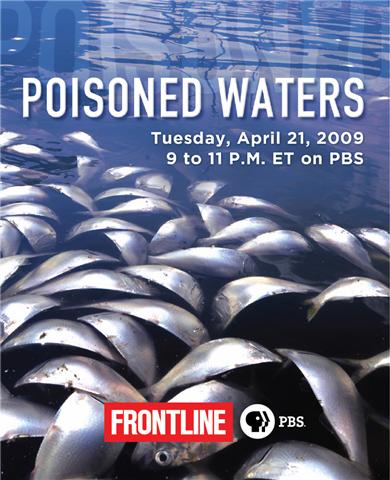
Frontline, a documentary series that discusses current affairs, recently did a brilliant documentary called Poisoned Waters (you can see it in full here), which outlines the U.S's long and difficult fight against pollution. It outlines what pushed the Clean Water Act (a landmark anti-pollution act) that forced polluters to become more responsible, the establishment of the EPA (Environmental Protection Agency - essentially our pollution control board), and much more.

If you want a history of environmental law in the United States, then DEFINITELY watch it.

But probably most importantly, people from the developing world NEED to watch it too, because this tough regulation on polluters in the US is what started the push to outsource these pollutants and polluting industries onto emerging and third world economies. Also, the developing world has the chance to step up and not make the mistakes, we in the first world have already made.

I think that's the key. Developing and emerging economies are at a point of bypassing, surpassing, and innovating beyond the first world to be EVEN better. Rather than complain about what they don't have, they should take the chance to challenge themselves to learn from our mistakes and do it even better.

Here is a sneak peek:

Tuesday, August 12, 2008

Run Lornah Run


Lornah Kiplagat, Kenyan (now Dutch) long-distance runner (photo courtesy: PBS/Frontline)

The Olympics are on right now, much to my own delight. I love watching and getting into the Olympic spirit. I always get annoyed with the U.S media's obsession with their own athletes and how many medals they win, but atleast they show the Olympics! I remember being on assignment in South Asia during the 2006 winter olympics, and I was furious that I couldn't catch the opening ceremony. Ten channels were dedicated to cricket highlights (a most useless game, in my opinion), without a single allusion to the world's greatest sport show!

For me the greatest thing is seeing female athletes from developing countries. Women aren't encouraged to play sports or compete in many of these cultures. In fact, they are often discouraged. As I have been told many times myself, "what's the point of girls playing sports...they only get married and work in the kitchen! Sports are for boys only." I still don't get that logic...but whatever! If women end up becoming sports legends, its often because they did it on their own or with the help of a small (1-3 people) supportive group, against the wishes of a vast majority of the people around them. So even to be on a world stage, without medaling, is a HUGE deal! I wish more media stories captured these struggles and celebrated these women.

Back in 2004, PBS profiled one such amazing athlete, a Kenyan athlete by the name of Lornah. After competing successfully in a series of long distance events, she took her money back home to invest in developing the next generation of female Kenyan runners. Its a beautiful story! Watch it here (http://www.pbs.org/frontlineworld/stories/kenya/)

Monday, April 7, 2008

Water 102: Water Distribution


Men, women, and children rush to get water from a well in Ethiopia (photo credit: Andrew Heavens)

Now that we've covered the processes involved in water treatment, the next stage is water distribution.

As stated in the Water 101: What is the Water Problem post, a huge part of the larger "water problem" is the transportation, storage, and distribution of clean water. In developed countries like the U.S, Canada, and most European countries, and urban parts of some developing countries, water is generally treated and distributed the same way. Its generally treated at a treatment plant, then distributed in pipes. The water usually comes disinfected and ready for drinking. People don't need to store the water, because the distribution system keeps the water clean and disinfected until you need it.* Once water comes in contact with contaminated areas or is exposed to the air, it gets contaminated.


Water flows out of a pipe in the UK countryside (photo credit: Martin Anataman)

*This may NOT be true of developing countries. Quite often there are water shortfalls, or the water distribution is so low that even in urban centers, families have their own boreholes that they pump water out of for use. They then regularly boil the water for drinking or order drinking water from wholesale providers.

In most developing countries, particularly in peri-urban, slum, semi-rural, and rural communities, water needs to collected from a central point (either from a tap, tubewell, borehole, river, lake, pond or other open water source), then carried to their homes. This is generally the work of women and children, who walk six miles (9.6 kms) to and from the water collection area. Water is heavy, weighing approximately 1 kg per litre or 8.34 lbs per gallon of water. Often the water collection and storage units are contaminated; if not, the pots or other collection units are open to the air and easily get contaminated. And finally when drinking the water, they dip their hands into the pots to get the water. Essentially, its very easy for water to get contaminated at any point.

In developing countries, people are responsible for the water collection, storage, and decontamination, which is why this is a major problem for them. The risk for illness and health issues resulting from lack of clean water or neck/head/back problems are very high. Therefore, besides availability of water, transportation and decontamination are major issues that need to be addressed when designing technology for developing countries.


L-R: A water truck carrying water into the periurban areas in Kenya (photo credit: Stig Nygaard); A line of colorful pots mark the queue for women and children in line to collect water in India (photo credit: McKay Savage).


Young women carry water back to their homes in Somalia (Copyright: Heather Arney / WaterPartners International)

Thursday, March 13, 2008

mobile phones and their future

The cellphone has revolutionized business by improving connectivity between some of the world's poorest people. In his bestselling book "Fortune at the Bottom of the Pyramid" C.K Prahalad talks about "connectivity" as being an important aspect of improving a person's socio-economic standing. Most third world countries suffer from a desperate lack of infrastructure, that keeps its people grossly deprived of any interaction with the outside. This lack of interaction results in a lack of information, which keeps them ignorant of means to make their lives better.

It is easy for people to say that what keeps the poor in a state of poverty is their laziness. That is true of maybe a handful of them. The vast majority, I've seen work hard and desperately want ing to extricate themselves from their poverty. What keeps them poor is pure ignorance, lack of information, and without libraries, good schools, role models, or the internet, they have no way of changing that. They don't even know where to go for information.

That brings forth the One Laptop Per Child program, the wikimedia foundation, or others that are trying to bridge this gap. I'll talk about the computers in a later post. But what I think is the future, and what is already revolutionizing socio-economic growth in the BOP (Bottom of the Pyramid) is the cell phone.

Take this market I came across in northern India, where flowerwomen were SMSing across villages to find which of the nearby markets was "happening." Once they knew which one had higher demand, they would clamber into the corresponding bus and sell their flowers in the right spot, generating a higher profit. John Adams would be proud...this is market efficiency at its best.

Yesterday, I had a conversation with George, an old colleague from Kisumu, Kenya, about life there. I've been to Kisumu, and there isn't much infrastructure to boast about. Although the third largest city in Kenya (Nairobi and Mombasa are first and second), all the main shops fit on a single street. Its like an overgrown village. There are few internet cafes and they are expensive. George is not rich. But he is ambitious, intelligent, and interested in making something of himself. So he uses his mobile phone to log onto the internet and check and send emails (which is cheaper than calling the US). So in a matter of half an hour, I could help George with solving some technical issues about his water system at home. Having no library or computer wasn't a problem. He could atleast contact me and I could get him the information. So now George's water system is working and he's drinking clean water again. That's the power of connectivity.

Africa today is the world's largest growing mobile phone market. Our second hand phones often end up there to be quickly grabbed by someone. Who would have thought that a Swede's broken down tossed-out phone would be fixed and grabbed up by a poor Malinese woman in Timbuktu. Globalization has done some amazing things. Cell phones are a market I would also keep investing in.

Wednesday, March 12, 2008

The purpose of this blog

This is a very personal story, and I share it only because this issue is so personal to me.

A few years ago, I found myself in India with the rare and beautiful opportunity to learn from the poorest of the poor. I was lost and confused in my life, and had no idea where I was going. India seemed like the best place to lose myself. With its complex and beautiful environment of competing landscapes, diets, cultures, castes, languages, colors, flora and fauna, India was a mini-world of sampling waiting to be tasted. Some NGOs saw me wandering around, took a chance (NGOs are desperate like that), and they put me to work immediately. I can't say I did much for anyone but my own self...not intentionally.

During my travels around that year, I was struck by how much of someone's quality of life could be improved by simple advances in technology - lighting, water purification, general health awareness, agriculture, etc. Or technologies that were available in one part of a country (or world) that never made it to other parts. There was a distinct gap in information that desperately needed to be filled.

Since then I've spent a great deal of time studying, developing and implementing different appropriate technologies. My own specialties are in water, sanitation, and energy. But my interests are far wider than that. EVERYTHING is connected. And better engineered and sustainable technologies have long-standing effects on other sectors of a person's life and ultimately society.

Some day, I'd like to start a CNET/digg.com of appropriate technologies from around the world, where people can submit, discuss and grade the different technologies. But until then, I'll do the blog.

I don't know much about a lot of things. But as I learn about things, I'll put them up. But keep me on my toes...kee your comments coming and I'll do my best to keep up.

Thanks for reading.