Showing posts with label USA. Show all posts

Sunday, July 11, 2010

Is the World Ready for Waterless Urinals?? Article from WIRED

Gotten from Wired Magazine, July 2010. Credits below

____________

Pissing Match: Is the World Ready for the Waterless Urinal?"

By Joshua Davis June 22, 2010 | 12:00 pm | Wired July 2010

In a laboratory 10 miles east of downtown Los Angeles, a mechanical penis sputters to life. A technician starts a timer as a stream of water erupts from the apparatus’s brass tip, arcing into a urinal mounted exactly 12 inches away. James Krug smiles. His latest back-splatter experiment is under way.

Krug is an unusual entrepreneur. Twenty years ago, he was a rising star in the film and television business. He served as a vice president of the Disney Channel in the 1980s and ran a distribution company with members of the Disney family in the ’90s. But 11 years ago, Krug became convinced that the world did not need another TV show. What it needed was a better urinal.

His transformation from Hollywood player to urinal evangelist began in 1999 at the Universal Studios Hilton in LA. A business acquaintance of Krug knew that he was interested in exploring new opportunities and arranged a meeting with Ditmar Gorges, a German engineer who fervently believed that flushing a urinal was a waste of water. Sitting in the Hilton lobby, Gorges gushed potty talk. He explained that he had invented a water-free urinal and pointed out that urine was already liquid and a generally sterile liquid at that. Gravity could drain it completely. No flush necessary.


Krug immediately grasped the implications: The German’s humble innovation had the potential to save millions of gallons of water at a time when demand for the natural resource was draining aquifers dry. It would do more than any film or TV show to solve a pressing problem. Krug decided to help.

Drawing on sales skills he’d honed at the Cannes Film Festival, Krug dived into the bathroom business. He formed Falcon Waterfree Technologies with Gorges and explained to anyone who would listen that the water-free urinal would save more than just water: In California, a fifth of the electrical output was consumed by processing and pumping water. Cutting water usage would reduce our carbon footprint.

Falcon wasn’t the first to develop a waterless urinal. A company near San Diego had been struggling to sell them since 1991. But Krug made a conceptual breakthrough: The real profits wouldn’t come from the urinals themselves. They’d come from selling the replaceable cartridges that sat in each of the waterless receptacles.

In a traditional urinal, water pools in the drain after every flush, preventing sewer gases from escaping into living areas. Gorges’ invention employed a plastic cartridge filled with a liquid sealant. Urine could pass through, but sewer gases remained trapped beneath the sealant no water needed. The $40 cartridge had to be replaced after 7,000 uses, turning a onetime urinal purchase into a perpetual income stream. Krug’s business model took a page out of the Gillette playbook: Keep the urinal cost low and lock customers in to buying the cartridges.

He quickly won converts. Cable tycoon Marc Nathanson made a substantial investment in early 2000, and in 2001 Falcon began to manufacture its urinal, dubbed the U1P. Soon Al Gore signed on as an adviser, and in 2006, Jeff Skoll, the first president of eBay, made a significant investment. Krug was sure the world was ready for a better bowl there hadn’t been any major advances in urinal technology for decades but there was something he wasn’t prepared for: the plumbers.

Mike Massey didn’t like Krug’s urinal. As head of PIPE, a plumbing union advocacy group in Southern California, Massey looks out for plumbers’ interests. And as far as he was concerned, the waterless urinal was a threat to public health. Diseases might fester because the urinals weren’t being washed down with every use. Sewer gasses might leak through the cartridge. “People take plumbing for granted,” Massey says. “But the reality is that plumbers protect the health of the nation. That’s how we think of our job.”

Full story at Wired: http://current.com/1fnmo4c

Saturday, February 27, 2010

Letter from the Field: Questions for Leadership


Are we asking the right questions of our leaders?? (photo credit: Tim abbott)

One of my Indian buddies emailed me a set of thoughts this morning. Inspired by a post he read on someone's blog, he wondered about how well he knew his leaders. How well we all know our leaders...how we well we know our own leadership abilities.

His email really made me think. Parts of it proved to be an excellent questionnaire for myself (good prep for a job interview too!). Anyways, here you go...

Ask your Leader this.

Be it your Boss, your MP or you prime Minister... or yourself, if you
are a leader (we all play leader roles to someone or some people at
some or all times)
[from the blog of Lee Iacocca, the "king of straight talk"]
Wednesday, February 20, 2008
Demanding Answers
I’ve been thinking a lot about the Presidential race and the remaining
front runners. Last year, Katie Couric asked if we’d come up with some
questions, based on my latest book Where Have All The Leaders Gone?,
to ask the candidates.

Take a look at the following questions. Do you know any of the
candidates’ responses to them?

1. Leaders are not born; they’re made in times of crisis. Name a
crisis that you have faced, and talk about how you demonstrated
leadership.

2. Name your two primary models for leadership from the past 50 years.
These are the individuals you call to mind when you’re faced with a
tough decision.

3. The ability to collaborate with those who have different ideas and
approaches is a key factor in leadership. Give an example of a time
(professionally or politically) when you have successfully
collaborated with people who have different views.

4. As a businessman I learned that the best way to fully understand
what it means to be responsible is to meet a payroll every week. In
your life, when have you had tangible responsibility for the
livelihoods of others – and what did the experience teach you about
leadership?

5. Being President is not a one person job. The team is just as
important. Are you prepared to tell voters who will be on your team so
they can make an educated choice? In particular, who are your
candidates for Secretary of State, Secretary of Defense and Attorney
General? (If you’re not prepared to name them, can you name
individuals from recent history who have excelled in those positions?)

6. The United States has one of the lowest voter turnout rates among
democratic nations – especially for young single adults. What will you
do to encourage young people to vote and participate in government?

7. A leader inspires others to participate fully in the life of
democracy. The words of JFK – “Ask not what your country can do for
you; ask what you can do for your country” – still resonate. Give a
specific example of what you will ask citizens to do, and what
sacrifices you will ask them to make.

Maybe if these questions are circulated to millions by email (just
like the first chapter of my book), the tough questions will get asked
and the candidates will feel obliged to give the American people an
answer!

==============================
=========================


Made me think. How many of our Indian 'Leaders' in Politics can even
begin to understand these questions - let alone answer them.

But then again, how many of us in the corporate/business world - or
across any field of work for that matter - can answer these questions
about ourselves, or our "leaders"?


I for one, would love to ask these questions to a new brand of leaders
in governance and business shaping india's future...

cheers
P

Thursday, October 8, 2009

Truth, shame, and education


If the truth sets you free, then why do people hide behind the shame of it all?? (photo: Osvaldo Zoom)

A couple of days ago, I blogged about I Am Because We Are. It very interestingly juxtaposed with something else I saw a while ago...a critically acclaimed film called The Education of Shelby Knox on PBS.

One might wonder how I Am Because We Are, a film about orphans in Malawi, relates to a film about a kid growing up in Lubbock, TX...but its quite clear. It doesn't matter where you are, the truth seems to scare people. And further, shame is a powerful motivator.

The increasing rate of orphans in Malawi is from the increasing rate of AIDS in the country. And what is universally acknowledged as the biggest problem is the lack of openness of the issues of HIV/AIDS in their communities. Government and Community leaders are refusing to speak about the issue openly. The lack of knowledge and wisdom, and the consistent shame value placed on AIDS is perpetuating the situation. In the absence of good sensible leadership, the frustrated, largely uneducated masses are getting more and more desperate. This is leading them to even more risky behaviors -- raping virgin girls, "sexual cleansing" of AIDS widows, and every kind of nonsense witchcraft that is sinking them deeper with infection and poverty.

On the other side of the globe, in Lubbock, TX, the rate of teen pregnancy has sky-rocketed. The conservative school and town leadership are refusing to speak openly about the issue, instead pushing abstinence down the throats of their youngsters...who defy all odds and continue to reproduce at alarming rates. This is where Shelby Knox (and her truly amazing family) come into the picture; Shelby, herself a 15 y/o conservative Christian pledged to abstinence until marriage, is trying to understand what the best way is to address this problem amongst her peers. Over three years the film follows her as she lobbies and repeatedly fails to get sex education taught to young kids. In the meantime,

And so here, the two sides of the globe (and lots of places in between) are united by the shame of speaking openly about sexual issues. How is the abysmal leadership of Malawi (second poorest country in the world) any different from that of Lubbock, TX (situated in one of the richest countries in the world)?? Why is it so hard to speak the truth...even if it does set you free??

I am struggling to understand this bit. Why NOT do the sensible thing?? And how do you fix this??

Monday, September 21, 2009

Lessons from my trip

I'm back from my trip. I think everyone should take some time off and do something for themselves. This long-ish break was a b'day present to myself, and I enjoyed it thoroughly. I love traveling. There is SO much to be said for the education one receives while on their travels.

There is also a level of appreciation I feel for being back in the US (of course, the in-your-face advertising, and constant level of activity here quickly drained that out). Its nice to finally be in a place where I am understood immediately, rather than the wild gesturing and slow, repetitive speaking I've had to do. Where I can browse the magazines and books, and instantly understand what is written. And I like that everything generally works efficiently, sometimes 24 hours a day. But I do miss the European way of life; there is a tremendous emphasis on living well and a little more respect for human life there. People take care of themselves there, something that is completely missing here. Salaries aren't high there, but people seem SO much happier...continually reinforcing my belief that life isn't about money.

I generally have 3 rules when I am out traveling:
  • Eat locally.
  • Limit gadget use to 10-30 mins per day (I stick to the lower end usually).
  • Use as much public transit, and walk as much as possible.
This allows me to be quite away from my life at home (a true vacation), and be fully immersed in another culture. This is how my greatest learning happens.

From a "Tworque" point-of-view, most of my education came from understanding the points-of-view of colonial powers. I am continually curious about what prompted Colonization, their later cessation, and generally where these "Powers" are now as a result of their past actions. Are they really better off?? How do the citizens feel about their past? And where did their methods of governance come from. Being the product of a former colony myself, has allowed me a great understanding of why my country is the way it is. It also allows me to forgive and move on, and figure out the best way to deal with the current situation. 

Of all the places I visited this time (France, Belgium, Switzerland, and Germany), Belgium was the most fascinating. 

Belgium is utter chaos now. And I was shocked that such a small and chaotic country could have have colonized a significant part of Africa. Probably not so surprisingly, looking at Belgium today reinforced the fact that chaotic colonizers tend to transfer their chaos to their colonies (Portugal is another perfect example of this). No wonder former Belgian African colonies are still in a state of extreme and violent chaos (Rwanda, Central African Republic, and Congo).  I would highly recommend reading the book "King Leopold's Ghost" further on this subject. 

Knowing England, France, Portugal, and Belgium as I do now, I'm glad I came out of a former British colony. I can honestly say that their high-nosedness, and class-based governance combined with their interest in advanced science, technology and education (ironically) created better colonies than any others. If you look at colonies that have best survived the tests of time, former British Colonies are probably most stable.  Of course there are exceptions, and I want to make it clear that colonization, British or otherwise, did TERRIBLE, terrible things. I do not sanction the act at all, but it did happen, and it sometimes needs to be analyzed at a distance.

Finally, its a pleasant change to finally have people think positively of the US. Obama has significantly "upped the ante." The past eight years were a particularly miserable time to be traveling around. I heard every kind of anti-American sentiment (quite rightly so) when I was out-and-about, particularly in the developing world. But it does get tiring, and it is SO refreshing to not have to deal with it any more.

Wednesday, July 22, 2009

The stupidity of short-term thinking


photo courtesy: Innaminnafly

I'm flying to Europe for six weeks in August (and I won't be blogging much during that time as I know you are all dying for a break! :-) ). And, I'm VERY VERY annoyed at the airline industry right now.

Travel is a luxury item, and with the economy struggling as it is, only crazy people (like me) who are footing their own bills or business people who have someone else footing their bills are doing the traveling. The once high-flying (pun-intended) airline industry is struggling to pay their own bills, and is consequently trying to punish anyone who is trying to help them out.

Normally, with packed flights through most days of the year, airlines keep peak season rates relatively low. But with such low demand, airlines are trying to make their profits entirely in the peak season...so poor, unfortunate idiots like myself are stuck with abnormally high rates. (I try my best to avoid peak traveling seasons in general, because I dislike crowds intensely. But this time, I had no choice.)

This is what I call stupid short-term thinking. While they make money in the short-term (really??), in the long-run, they are "shooting themselves in the foot." And here's why:
  • They are losing on the majority of people sitting on the fence about traveling. I know plenty of people who suddenly have a lot of time on their hands and have been contemplating traveling, but have given it up because of the exhorbitant rates. Airlines are betting on the few who HAVE to fly, not on the potential of people who might fly if their deals were better.
  • They are losing out on customer loyalty. What few airlines realize is that a lot of frequent travelers are loyal, and are powerful word-of-mouth marketers. I am loyal to Virgin Airlines for example (amazing customer service and in-flight service!!), and Southwest Airlines, and I used to be to JetBlue before their customer service started sucking. When you bully people into doing things they don't want to do or don't think is fair, they will hold it against you. In this case forcing us to pay unfair fees and putting up with awful customer service while it will get us this time, will lose us in the long run (this is why I will NEVER fly Northwest/KLM again!)
  • Allowing poor business practices to continue, even flourish: The larger US Airlines have the absolute worst service in the world, and they have no excuse. For years, the US government notoriously protected their airline industry, allowing awful business practices to endure. When the markets finally opened and protectionism was terminated, these "institutional airlines" (US Airways, Delta, American Airlines, United, etc) struggled. Their burgeoning bureaucracy made them inefficient against innovative, nimble, emerging airlines like Southwest Airlines, JetBlue, Frontier, and others. The older airlines have only survived by capitalizing on their monopoly routes, their loyal customers, and building alliances with better airlines around the world.
Still struggling, the institutional airlines turned to stupid short-term thinking, taking their ire out on the customers. Fly one of them and you'll find yourself paying for everything. None of the institutional airlines have on-demand entertainment, a common availability amongst every first-world airline. If you want it, you pay for it. Many of these airlines are locked into lengthy and heavy contracts with labor unions; so their staff are often old, cranky, angry people who have seen a once glorious job go sour. Naturally their customer service is terrible. Further, they've cut down on seat spacing, have aging fleets, ancient in-flight entertainment, and make you pay for everything, including your water and your luggage (in addition to your already sizable airline ticket).

Its ridiculous to me that these airlines are thriving in this economy. And why?? Because the now cost-conscious consumer is forced to go with the cheapest deal, not the best airline. While hunting around today, for example, Delta Airlines was charging $1121 for a round-trip ticket to Paris; Lufthansa, a relatively superior airline, was charging $1600 (which is currently average for all non-American carriers). Normally, I would pay the extra $100 or $15o over Delta just to get better service. But this time, I can't even afford the $1121. But its my only choice, so I take it. So here we have it...the market is working against us and them.

Yes, airlines have investors and shareholders. But shareholders are reasonable people. Everyone knows that the economy is doing terribly. It would be ridiculous to expect that Delta would churn out record profits at this time...

My point is this...short-term thinking, without considering the bigger picture is very stupid and dangerous. While the ailing US institutional airlines continue to get through another year, its only a matter of time before they will have to bow out. After all, GM just did...only a matter of time with the rest...

Thursday, June 4, 2009

Thoughts on Fixing Education - I


Esquith, and his 5th grade class at Hobart Elementary (Photo courtesy of AMDOC)

Good teachers blow me away. I was brought up by teachers, and have always sought a lot of my inspiration from within the confines of my school or college.

Recently, I spent the day with Rafe Esquith. His kids blew me away. In an elementary school that graduates only 32% of their enrolled kids, Rafe has managed to ensure that over 95% of his kids graduate from college. Rafe told me (and showed me) that there are no shortcuts. It takes discipline, dedication, and lots of love. I was there from 2-7pm on a friday, long after the school grounds had closed and most other kids had gone home; not Rafe or his kids. They had already been in that room 13 hours that day. Yet they were still around...voluntarily...practicing Shakespeare, for fun (btw, follow this link and you'll see their idea of practicing Shakespeare is).

He told me that his best piece of advice is "don't really do something unless you really, really love it." Rafe, who is happily married and has successful grown children of his own, spends most of his time in the classroom with the kids, who are mostly immigrants from broken families living in gang-infested neighborhoods. And his kids love him back with a fierce passion. The resulting loyalty has produced amazing results.

Rafe was the real thing. The results were all around me. So I sat him down and asked him about how to fix our broken education system. "You know the truth, Pragnya??" he asked, "I don't know if its fixable. Our moral and societal values have declined so much, that too much of the parenting has fallen on the teachers. Its NOT an easy solution. Its going to be long term and its going to need the commitment of many. I don't know if Americans want to be this committed." I was a little disheartened with this. But he was right. When I asked about the developing world, he said, "If you really want to fix it, go to the developing world. Atleast they have the chance to do it right."

I asked him about the KIPP system that Bill Gates had spoken so highly about. He scoffed, "Any school that has a PR person on staff, is NOT a system that works. The real PR are the students. Look at them. If the alumni are good, ask yourself what the school is doing right." As I vehemently agreed with him, he said, "there is nothing magical about what I'm doing. Its pure hard work and commitment. I am committed to these kids, and I'm committed to being a better teacher. I wasn't good when I started; I've learned to be good over time. If anyone is this committed, they will make a difference. I use Shakespeare, because that's what makes me tick. But other teachers should use what makes them tick."

Rafe has two best-selling books on education. I thumbed through one briefly before our meeting; and hope to read more of it when it comes through the library again (it was checked out after I got back from meeting him).

Tuesday, May 26, 2009

The far-reaching consequences of a policy


Policymakers need to be big-picture and long-term thinkers (photo credit: S. Christopher)

What few understand is that policy has far-reaching consequences that near-sighted politicians and lobbyists rarely look to understand properly. In the absence of solid leadership, these shortsighted politicans are able to sell their story to the public making the situation very dangerous. A perfect example is the US' ridiculous Iraq war or even their shortsighted attack on Afghanistan. In neither case did the policymakers really think about the lack of training they had, how long they could commit or anything else. Now the US finds itself in the middle of a major quandary that is also killing millions of innocent people on both sides. The shortsightedness of the policymakers is costing the world in the long run.

Everyday, millions of these policies are thoughtlessly being implemented. I saw two pieces in yesterday's newspapers that brought this back to mind; one in the US (that will have global impact), and the other in Egypt.

The first was featured on 60 Minutes, and showed how the clauses in the economic stimulus money, especially the "Buy American" model, is affecting Americans. For example, any organization getting the stimulus money must use American steel for any work they do. Seems simple right?? Not exactly. Watch or read this piece to understand why every policy has two sides.


Watch CBS Videos Online

Then this morning I saw this piece in the NY Times about the new "ban pigs" clause that Egypt has come up with, post swine-flu. You wouldn't believe what the effects of that are.


The bottomline is this: Every story has atleast two sides. If it doesn't, then you are being lied to. Be cognizant of both, then make the best decision you can. But also think about how to mitigate the effects of the other side(s).

Thursday, April 30, 2009

A lesson in environmental law


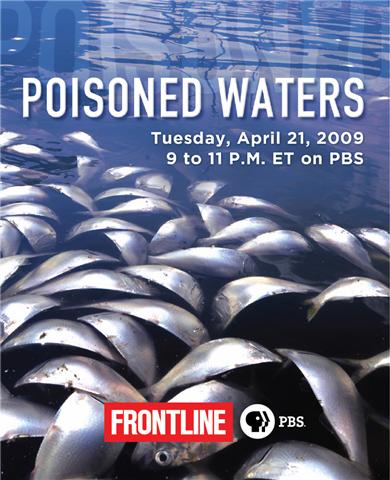
Frontline, a documentary series that discusses current affairs, recently did a brilliant documentary called Poisoned Waters (you can see it in full here), which outlines the U.S's long and difficult fight against pollution. It outlines what pushed the Clean Water Act (a landmark anti-pollution act) that forced polluters to become more responsible, the establishment of the EPA (Environmental Protection Agency - essentially our pollution control board), and much more.

If you want a history of environmental law in the United States, then DEFINITELY watch it.

But probably most importantly, people from the developing world NEED to watch it too, because this tough regulation on polluters in the US is what started the push to outsource these pollutants and polluting industries onto emerging and third world economies. Also, the developing world has the chance to step up and not make the mistakes, we in the first world have already made.

I think that's the key. Developing and emerging economies are at a point of bypassing, surpassing, and innovating beyond the first world to be EVEN better. Rather than complain about what they don't have, they should take the chance to challenge themselves to learn from our mistakes and do it even better.

Here is a sneak peek:

Wednesday, April 22, 2009

Friendship, healthcare, and a gym


Find a friend, says the NY Times, and your wellness factor increases!

The American healthcare system sucks. Not because the doctors or quality of healthcare sucks; but because of insurance issues. You can't get decent care in this country without buying into the insurance system. Ironically, frustration, rather than being about the medical system, is about measly insurance companies who couldn't cure a patient even if their life depended on it.

Because I'm an independent consultant, I'm responsible for my own health insurance (most Americans get their insurance through their employers). And because its so expensive and so hard to decide what type of health insurance to get, I've been living without health insurance for several years now. But the tables are turning (as they always do).

I'm getting out-of-shape, and everyone is scaring me about terrible calamities to come. So I went to several gyms yesterday and found out that insured people have lower monthly fees, which really pushed me to start hunting for an insurance policy. I am having SO much difficulty picking something. Every one of my friends then gives me an opinion about which one to pick and they are all different, further confusing me.

In the midst of this, I read three different articles in the same issue of the NY Times, all relating to healthcare: this one about a family struggling to keep their son free of cancer, and this one about friendship being good insurance.

I'm lost and frustrated, have high gym rates, run the risk of taking my wonderful family into financial bankruptcy; but I have friends and hopefully that will keep me alive and well. Maybe I should take my friends to the gym, and we really will be alive and well to an exponential degree! :-)

Friday, February 13, 2009

BusinessWeek is looking for the Best Social Entrepreneurs in the US...know any?


Yup, BusinessWeek is looking for America's best social entrepreneurs. Go here and here for more info.

Nominations close on Feb 20, 2009.

Hat-tip to netsquared.

Tuesday, January 20, 2009

Change is here!


We have a new President of the United States and I am THRILLED to bits. I think Michelle is super cool too. I have never felt more hopeful, and its a wonderful feeling.

I simply had to say that out loud.


(I still had to put the below picture because it was so funny!)


(at Madame Tussaud's wax museum in London today. photo courtesy of Washington Post)