Thanks for visiting! On this site, I blog about new things I've learned, thoughts about my work, and life. This blog tends to have a strong focus on infrastructure, innovation, and entrepreneurship in the developing world.
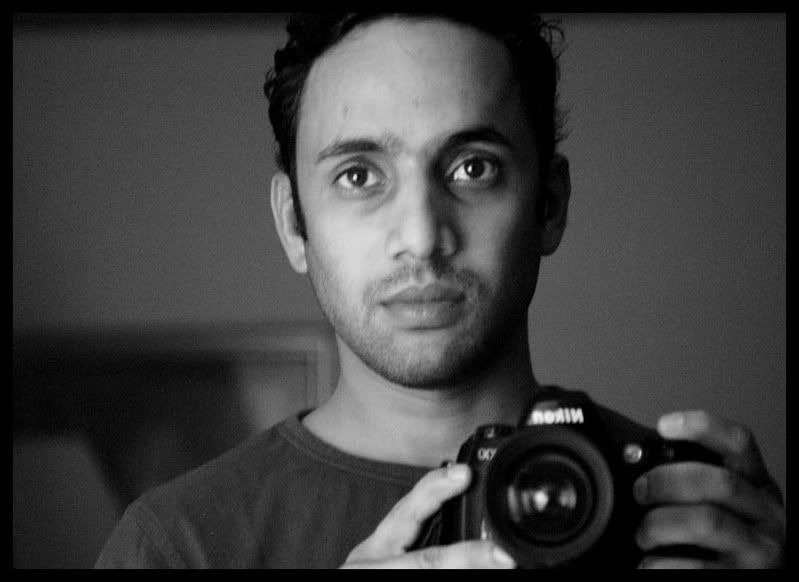
Ryan Lobo was one of the stars of TEDIndia, in my opinion. His presentation was not only spot-on point, but hauntingly beautiful and poignant. It was wonderful to come across someone so young and talented, and brave enough to go in a direction that his soul dictated. In the process he has collected a jewelled archive of stories; three of which he shared with the audience.
I've had the opportunity to interact since then with Ryan on a personal level; away from TED, in a more relaxed atmosphere, he indulged me in more stories over steaming cups of chai. I was moved by his earnest desire to do his job well, his commitment to authentic story-telling through multi-media, and most importantly by the person he is. Behind all his talent is an amazingly down-to-earth, accessible, yet deeply thoughtful human being.
President Obama was ahead of his time (photo courtesy: NY Times)
Sunday's NY Times paper was chock full of really great articles. It is during this time that I physically miss having the newspaper in my hands with my morning glass of milk and OJ, under the warm sun. But I'm not complaining.
(watching Ecotrip yesterday...the episode about what goes into making a paper napkin, I'm not going to cut down yet another tree to get my paper fix!)
Reading this article yesterday again confirmed for me that Obama started training for his critical leadership role as a kid. Obama was way ahead of his time in terms of his thinking (making him an idealist at that age...I wonder how lonely he was as a kid!). Coming of age in the greedy 80's, he formed ideas about nuclear issues that he had no business having even then.
“I personally came of age,” Mr. Obama wrote in “The Audacity of Hope,” his second memoir, “during the Reagan presidency.”
It was a time when President Ronald Reagan began a trillion-dollar arms buildup, called the Soviet Union “an evil empire” and ordered scores of atomic detonations under the Nevada desert. Some Reagan aides talked of fighting and winning a nuclear war.
The popular response was the nuclear freeze movement. Dozens of books warned that Mr. Reagan’s policies threatened to end civilization and most life on Earth. In June 1982, a million protesters gathered in Central Park, their placards reading “Bread Not Bombs” and “Freeze or Burn.” The nation’s Roman Catholic bishops issued a pastoral letter denouncing nuclear war.
Many Columbia students campaigned for the freeze movement, which sought a halt to additional nuclear arms deployments. Mr. Obama explored going further.
At that point the President, then a 21 y/o senior at Columbia University, wrote about disarming our nuclear stockpiles. Not only did he write about it in his report for his class (which got an "A"), but he also went on to pen a lengthy article on the same in the school newspaper. Twenty plus years later, just as he was being elected into the highest political office, the article surfaced again and blew people away. He was way ahead of his time. (see the Conservatives' take on this article)
Recently the President said this, which forms the crux of his thesis:
“It’s naïve for us to think,” he said, “that we can grow our nuclear stockpiles, the Russians continue to grow their nuclear stockpiles, and our allies grow their nuclear stockpiles, and that in that environment we’re going to be able to pressure countries like Iran and North Korea not to pursue nuclear weapons themselves.”
Policymakers need to be big-picture and long-term thinkers (photo credit: S. Christopher)
What few understand is that policy has far-reaching consequences that near-sighted politicians and lobbyists rarely look to understand properly. In the absence of solid leadership, these shortsighted politicans are able to sell their story to the public making the situation very dangerous. A perfect example is the US' ridiculous Iraq war or even their shortsighted attack on Afghanistan. In neither case did the policymakers really think about the lack of training they had, how long they could commit or anything else. Now the US finds itself in the middle of a major quandary that is also killing millions of innocent people on both sides. The shortsightedness of the policymakers is costing the world in the long run.
Everyday, millions of these policies are thoughtlessly being implemented. I saw two pieces in yesterday's newspapers that brought this back to mind; one in the US (that will have global impact), and the other in Egypt.
The first was featured on 60 Minutes, and showed how the clauses in the economic stimulus money, especially the "Buy American" model, is affecting Americans. For example, any organization getting the stimulus money must use American steel for any work they do. Seems simple right?? Not exactly. Watch or read this piece to understand why every policy has two sides.
Then this morning I saw this piece in the NY Times about the new "ban pigs" clause that Egypt has come up with, post swine-flu. You wouldn't believe what the effects of that are.
The bottomline is this: Every story has atleast two sides. If it doesn't, then you are being lied to. Be cognizant of both, then make the best decision you can. But also think about how to mitigate the effects of the other side(s).
Don't worry...its not what I've been through, but that's the name of the book I'm reading at the moment. Its a bit of international development sensationalism, as you can guess from the title. Three idealistic western do-gooders who want to "save the world" chronicle their tales of professional and personal trials while serving in some of the most dangerous places on earth as UN staff.
I think the book goes a little overboard with its sensationalism; still it does a very good job of showcasing what working with the UN (or other international development agencies) is like, what the lives of the staff and peacekeepers really is like, and puts to rest any romantic notions people may have about war, the UN, or outstanding US foreign policy.
The character I liked the most is Dr Andrew Thomson, a physician from New Zealand, who seems to get more into the cultural landscape than the other two characters. Here's a snippet of his thoughts as he is forced to exit Haiti after a poorly orchestrated "savior" operation by the US:
Over and over I replay in my head the implications of what we've just done. We told the Haitians that we couldn't physically stop their government from torturing and killing, but that if they told us in detail who was doing it and how, we'd bear witness and seek justice. Eventually the world would eb outraged enough to send soldiers and reinstall democracy...
They believed us, risked their lives to turn up at our offices all over the country, in full view of their attackers, to tell their stories. They exposed tehmselves, crawled in and spilled their guts, sometimes literally. They trusted me... Now that they are atheir most vulnerable, we're abandoning them, frozen in teh ehadlights, roadkill for the macoutes' machine. And we're flying out, clutching our precious blue UN passports and bags full of Haitian art.
We just showed Haitians that our lives are more valuable than theirs...
The most basic primciple they teach you at medical school, years before you even get to touch your first patient, is "First, do no harm." But harm is exactly what we've done, identifying the next victims for the asassins running Haiti..."
Definitely worth a read. If not anything else, you'll learn a lot!
I'm on a bit of a movie binge now. I've been working my (out-of-shape) butt off (in the office unfortunately, not in the gym) the past several weeks and needed a brain breather. Bring on the movies!
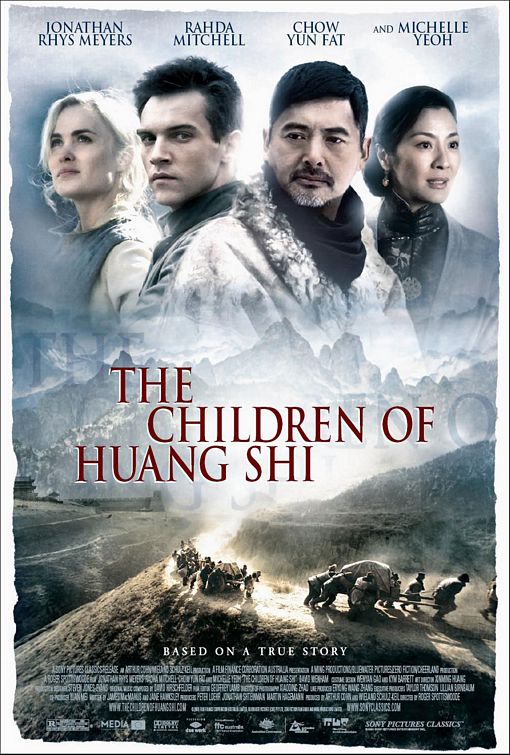
Last night I watched "The Children of Huang Shi" (preview here and below). Its based on the true story of George A Hogg, an Oxford educated journalist who was in China during the 1930's to capture the atrocities the Japanese Imperial Army against the Chinese people. Ultimately, he takes 60 Chinese orphans under his wing and walks 700 miles across some of China's harshest terrain to save the kids from the Japanese, before finally succumbing to Tetanus.
BEAUTIFULLY filmed, with a stellar cast (Chow Yun-Fat, Jonathan Rhys Meyers, Radha Mitchell, and Michelle Yeoh), and a Chinese-British crew, the film tells the story against a beautiful backdrop in a sensitive way. I quite enjoyed it and it was a great history lesson!
Time Magazine photographers have outdone themselves again. In the past couple of weeks, they've put out some powerful photoessays on a range of interesting topics. Here are some:
5. Slumdog Entrepreneurs. Real life entrepreneurs in the same slums (Dharavi) that the move was shot in (see picture above; photo credit: Daniel Beheruhak).
You've probably been following the ridiculous david-vs-goliath war going on between Georgia and Russia. I think war is dumb and should be used as an absolutely last resort. And stupid men should not rule countries, because they go into war so wantonly...like its a G.I Joe game.
I just read a particularly touching note on a blog somewhere. A Georgian actress wrote this journal entry appeal that ended up on a blog. Its very raw and real. She, like many other innocent people, is stuck in the middle of this war that she had nothing to do with (like all stupid wars).
An Ethiopian pastoralist crouches down at the edge of a dry crater that was a large watering hole for his livestock. Drought and other issues are shrinking water availability, increasing tensions in communities across the globe(photo credit: Andrew Heavens)
While energy production and the lack of it is taking centerstage right now, I believe the water availability problem is just barely hanging out below the surface. When it bursts, it will be BIG.
As discussed in the Water Problem post, water availability is a MAJOR problem. With a growing population, increasing pollution, and climate change causing extreme weather conditions like droughts, communities around the world are clashing (sometimes violently) to stake out dwindling water reserves.
As Barcelona runs out of water, Spain has been forced to consider importing water from France by boat. It is the latest example of the growing struggle for water around the world – the "water wars". [...]
If you are interested in the topic of water wars, here are a few resources to get you started:
- Blue Gold, the book. Also here's a preview of the powerful documentary based on the book:
- Popular journalist Daljit Daliwal's piece on the subject, in ethiopia.
- HBO's film "H2O up for sale" gives more information on this:
- here's the link to Botswana's existing water wars. I can't embed, but you can watch 20 mins of the documentary by following this link.
- If you think that water wars aren't a part of the United States, think again. There is plenty of literature out there about California's and Michigan's water wars. Here Jim Lehrer does a piece on his Newshour program on PBS.




 Posts
Posts

