Showing posts with label Africa. Show all posts

Tuesday, September 28, 2010

Mo Ibrahim on Good Governance


Mo Ibrahim: Engineer, Entrepreneur, Philanthropist, African, Activist, Leader (photo source: Mo Ibrahim Foundation)

Mo Ibrahim is one of my heroes. I first heard about him through a friend of mine, also dedicated to Africa's development. "He is one of Africa's most successful entrepreneurs," he said. I was immediately intrigued. Who was this man who had grown up in Sudan in rather minimal circumstances, who had gotten a PhD in computer engineering, and started one of the world's most successful mobile companies with 500 quid??!! How did he do it, and why did he do it??

So I began reading about him. I read about how passionate he was about the development of Africa's leaders...this Sudanese man who always had a big smile. He had started an innovative Mo Ibrahim Prize for Leadership, and was giving out scholarships to young and promising African students. And I badly wanted to meet him.

Two months ago, I finally did. He was invited to be Chief Guest at our School's anniversary meeting. And he did not disappoint.

The day he arrived, the University had a whole day of activities planned out for him. They were thrilled to have one of the world's most successful entrepreneurs in their midst. The school was buzzing with photographers, and all manner of people in suits waiting to make a big deal about him.

In the meantime, the man himself arrived with an entourage of one (his personal assistant) in a rather non-descript car. No one knew that he was there or to run out and take his picture. He walked in and appeared a little lost, found his way to the photo session where he managed to surprise everyone by showing up with little fanfare. And just as quietly and efficiently as he came, he disappeared after.

In the evening, I showed up at the lecture he was to give. In the tradition of my school to put its best foot forward, the lecture was held off-site at a fancy 5-star hotel ballroom. Half of my work-floor (including myself) was there to usher people in fancy suits around. Mo showed up early, again with just his personal assistant and a throng of Singaporeans following him around. All he seemed to want to do was find a reliable men's room where he could relieve himself and then relax. I think he was happy to just be left alone.

His talk was marvelous. Very honest, no BS. I really liked the guy. He had no frills about him and he was unafraid to say what he came to talk about: that we are mucking up our world with crappy leadership and governance, and that there were ways to fix it. I highly recommend watching his talk here (unfortunately it cannot be embedded). Its eye-opening.

I later had the opportunity to speak with him one-on-one, and asked him two questions:

Who are your heroes??
He said that growing up, he had three people's pictures on his wall: Marie Curie, Albert Einstein, and someone else who I can't remember (totally my fault...darn!)

What's the best piece of advice he has ever gotten??
He quoted an Arabic saying he had oft-heard growing up in Sudan. He translated it into something like this, "you come into the earth with nothing, and you will die with nothing." So he wants to make and do as much good as he can with what God has given him in the time that he is alive, because come death, he won't take any of this back with him.
Read more about the Mo Ibrahim Foundation, and Mo.

Friday, September 10, 2010

X PRIZE for efficient cookstoves??


Inefficient cookstoves are a major problem for the poor in the developing world. The soot has serious implications on health and poverty; and population growth, and rising energy costs leave the poor with no choice but to forage for their fuel resulting in environmental degradation, . (Picture source: columbia.edu)

One of the organizations I consulted for a couple of years ago, called the X PRIZE Foundation, where I helped develop the Global Development vertical has moved forward with a partnership with IIT Delhi and the Government of India to develop and launch a prize for developing efficient cookstoves.

Approximately 70% of Indian households -- more than 160 million households, comprising about 770 million people – are estimated to depend on simple but polluting cookstoves that burn solid fuel, mainly wood or coal. It also is estimated that approximately 400,000 to 550,000 people – primarily women and children – die of the resulting indoor air pollution each year in the country. This makes the cookstoves problem in India and the potential market for cleaner cookstoves amongst the largest in the world.

The cookstoves competition falls under the X PRIZE Foundation’s Education & Global Development prize group, which tackles major challenges in areas such as learning, hunger, health and water. Addressing the grand challenges of our time, the X PRIZE Foundation generates innovation through incentivized competition. Through the strategic design of ground-breaking competitions with significant, multi-million dollar prize purses, X PRIZE spurs collaboration among the world’s most brilliant minds to tackle the most pressing issues and create radical breakthroughs for the benefit of humanity.
More here.

Looks pretty interesting and exciting. Definitely a worthy issue. More about the cookstove problem is here and here.

Thursday, June 10, 2010

Voices are Crying


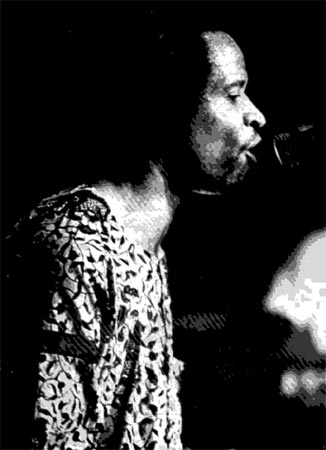
Musician Philly Lutaaya (photo source)

A friend of mine from Uganda sent me this. I thought I should share it... I agree. DO take a listen...
There was a popular Ugandan muscian called Philly Lutaaya. He went to exile in Sweden in 1979 and returned to Uganda in 1988 to a hero's welcome. Unfortunately he soon discovered he had AIDS. This was a time when most people across the world were still ignorant about the disease. To create awareness, he asked for his last days to be filmed and a wonderful 2 hour documentary of him was shot by the Swedish Red Cross. It was shown in many countries to create Aids awareness.
Philly was an incredible musician, one of my favourite songs that he did before passing on in 1989 was titled "voices are crying". This song is about the suffering of Africa's peoples at the hands of their leaders.
Do take a listen, the lyrics are trully moving http://www.youtube.com/watch?v=KgmgKQagFuA

Tuesday, December 22, 2009

You've got to watch Ryan Lobo on TED


(photo source: photobucket)

Ryan Lobo was one of the stars of TEDIndia, in my opinion. His presentation was not only spot-on point, but hauntingly beautiful and poignant. It was wonderful to come across someone so young and talented, and brave enough to go in a direction that his soul dictated. In the process he has collected a jewelled archive of stories; three of which he shared with the audience.

I've had the opportunity to interact since then with Ryan on a personal level; away from TED, in a more relaxed atmosphere, he indulged me in more stories over steaming cups of chai. I was moved by his earnest desire to do his job well, his commitment to authentic story-telling through multi-media, and most importantly by the person he is. Behind all his talent is an amazingly down-to-earth, accessible, yet deeply thoughtful human being.

Thursday, October 8, 2009

Truth, shame, and education


If the truth sets you free, then why do people hide behind the shame of it all?? (photo: Osvaldo Zoom)

A couple of days ago, I blogged about I Am Because We Are. It very interestingly juxtaposed with something else I saw a while ago...a critically acclaimed film called The Education of Shelby Knox on PBS.

One might wonder how I Am Because We Are, a film about orphans in Malawi, relates to a film about a kid growing up in Lubbock, TX...but its quite clear. It doesn't matter where you are, the truth seems to scare people. And further, shame is a powerful motivator.

The increasing rate of orphans in Malawi is from the increasing rate of AIDS in the country. And what is universally acknowledged as the biggest problem is the lack of openness of the issues of HIV/AIDS in their communities. Government and Community leaders are refusing to speak about the issue openly. The lack of knowledge and wisdom, and the consistent shame value placed on AIDS is perpetuating the situation. In the absence of good sensible leadership, the frustrated, largely uneducated masses are getting more and more desperate. This is leading them to even more risky behaviors -- raping virgin girls, "sexual cleansing" of AIDS widows, and every kind of nonsense witchcraft that is sinking them deeper with infection and poverty.

On the other side of the globe, in Lubbock, TX, the rate of teen pregnancy has sky-rocketed. The conservative school and town leadership are refusing to speak openly about the issue, instead pushing abstinence down the throats of their youngsters...who defy all odds and continue to reproduce at alarming rates. This is where Shelby Knox (and her truly amazing family) come into the picture; Shelby, herself a 15 y/o conservative Christian pledged to abstinence until marriage, is trying to understand what the best way is to address this problem amongst her peers. Over three years the film follows her as she lobbies and repeatedly fails to get sex education taught to young kids. In the meantime,

And so here, the two sides of the globe (and lots of places in between) are united by the shame of speaking openly about sexual issues. How is the abysmal leadership of Malawi (second poorest country in the world) any different from that of Lubbock, TX (situated in one of the richest countries in the world)?? Why is it so hard to speak the truth...even if it does set you free??

I am struggling to understand this bit. Why NOT do the sensible thing?? And how do you fix this??

Monday, October 5, 2009

Ubuntu: I am Because WE are


I Am Because We Are. Watch it!! (photo credit: http://blog.photoshelter.com)

I saw a beautiful documentary film today called I Am Because We Are (entire film is available below).

I had heard about it in the Spring, even gone to the official launch party in NYC. But it was made and backed by Madonna, and in the age of haute celebrity endorsements, I have become skeptical of their attention to something. How much do they really know? How much do they really care?? How long will their attention last?? Long after the cool is gone, will they still be around??

Today, in search of inspiration, I picked it up. I am glad I did.

I Am Because We Are claims to be a look at Malawi, but its really a more universal story of poverty in the developing world. The film looks at the bigger picture, examining a smaller problem (the increasing number of orphans) against the larger backdrop of economic development (where the orphaning is coming from and how it affects global poverty). There is an interconnectedness to their theory that I so believe in-- examining the history, the need for responsibility, the lack of leadership, a variety of indigenous perspectives, the positives, the negatives...its all in there. Alongside the development porn, there is an equal showcasing of the laughter, community, and resilient spirit of the locals. There are perspectives of kids, adults, Malawians, Africans, and international people with a vested interest in the country or region. The opinions are educated. It is REFRESHING to hear Malawians analyze their own country's situation in a most educated manner examining causes and effects, and solutions, rather than the typical western viewpoints. Its wonderful to hear Africans speak about their continent in an intelligent manner. I GREATLY appreciated this. The West, doesn't have all the answers. Each country needs to come up with its own.

The title comes from the Zulu word "Ubuntu" meaning "I am because we are." Think about it!! I can't think of a better term to showcase our interconnectedness.

Good News. I learned that you can watch the entire film for FREE on YouTube. Check it out here on YouTube and below (NOTE: I recommend watching it on the YouTube site. Its much faster and you get the larger, widescreen version!)

Tuesday, June 30, 2009

Blog Spotlight: Wronging Rights


photo source: http://www.actagainsttorture.org/photogallery/human_rights_for_all.jpg

I've been following the Wronging Rights blog for some time now and have really enjoyed the material they put out. The authors are a pair of Americans I think, Amanda and Kate, who have put up very little information about themselves. But I sense that they are both Human Rights lawyers or have some such background.

Anyways, the blog focuses on calling out Human Rights violations and violators around the developing world. There is a great deal more emphasis on Africa, than on the other continents (I'm sure this has no bearing on where idiocy prevails...because there is quite a bit of it here locally as well!).

Recently, they did a great series of interviews to educate readers about the Iran protests. I've generally been irritated by the mostly topical and irrelevant information that I've been getting on the web about the current state of affairs there. However, the WR series really boiled down the issues to explain the most important and relevant bits.
Ask an Iranian: Part I, Part II

Anyways, check them out if you have a chance...

Wednesday, June 10, 2009

The Case for Idealism...an Ode to Idealists!


Three young idealists, who blew away their competition: (L-R) Gandhi, Obama with his high school basketball team, and Walt Disney, all in their teens.


I often wonder about the difference between great idealism, great ambition, and great stupidity. It is a fine line indeed. Idealism has always been scoffed at. But where would we be without it?? Failed idealism is often termed as stupidity. But is it really??

I like the quote "Aim for the moon; if you miss it, you will still land among the stars." It is only when you aim high that you can soar high.

George Bernard Shaw once famously said, "The reasonable man adapts himself to the world; the unreasonable one persists in trying to adapt the world to himself. Therefore all progress depends on the unreasonable man."

And indeed so. Its very easy to forget that the people who have been the greatest visionaries were also termed as idiots and idealists. While everyone now might laugh at the thought, Americans have been quick to forget that the president they now adore would not have been but for a healthy dose of idealism on his part. Barack Obama for all given purposes had no business even thinking he would be President. He was of mixed parentage, with a white mother and African (different from African American) father; grew up in Hawaii (a state that has produced zero presidents before this one) with no proper religious background; had a muslim middle name sandwiched between strong Kenyan names; had a Harvard degree, no military service, very little public service, and was of modest means. Add onto that, that he was running against a Clinton. Yet he ran, and he won. And hopefully, he will be the change we all want to see among leaders of our world.

Speaking of "be the change," think of Gandhi, a softspoken, slight Indian man who thought that he could take down the mighty British empire, with a grand total of, well, no weapons. Even fist fights weren't allowed!! If he had told you in the early 1900's that the non-violence movement would not only encompass India and topple the British empire, but bring civil rights to African Americans in the US, reverse apartheid in one of the most racist regimes in the world - South Africa, bring the Chinese military to its knees in Tianenman Square, and become the mainstay of EVERY modern demonstration in the world, you would have laughed!! Many did; yet all those things happened and the movement still endures.

A few days ago, I found myself in another mecca of idealism - Disneyland. Riding some of the rides I had loved as a kid, I was struck by how timeless they were. Disney was SO ahead of his time. To think that much of Disneyland and Disney World's layouts have scarcely changed since they were built, inspite of the massive changes in technology in the recent past; that the most popular rides then still endure, and they continue to "make dreams come true" everyday is mindboggling. I'm sure if Disney had told you in the 30's that people would pay an-arm-and-a-leg to watch talking robot animals in the 21st century, we would have laughed. Yet here we are, years later doing exactly that.

Probably the biggest and powerful idealists are parents and teachers - moms, especially.

I think we need more idealism. Balanced with pragmatism, an unrelenting idealist with clear vision is capable of great change. Rather than laughing at them, maybe we should support them with our pragmatism. That while they soar high, we can be the tails on their kites to guide them, while also enjoying the ride.

Here's to the idealists amongst us!!

Friday, April 3, 2009

What Africans think about Aid-III

Following on the heels of Andrew Mwenda's talk, and Jen Brea's excellent article, I wanted to post this last talk by George Ayittey , who had set the tone for the conference in the first place. I would highly recommend browsing through the entire collection of excellent TEDAfrica talks here, and look at Ngozi talks for example. Be prepared to open your mind:


Thursday, April 2, 2009

What Africans think about Aid-II


Freelance Journalist Jennifer Brea's article has caused quite a stir (photo credit)

Almost two years later, an article written by a young freelance journalist (now graduate student at Harvard) about African development and aid, is still making the rounds. Jennifer Brea was a Fellow at the TEDAfrica conference in 2007, when she happened to witness an exchange between fiery African Journalist Andrew Mwenda (whose talk I blogged about yesterday) and the West's passionate Africa advocate, Bono from U2. You can watch the  talk that Mwenda gave here (I believe the exchange between the two has been edited out, but from eyewitness accounts, it was quite an exchange!). 

Mwenda's talk resonated with many of the youth at the Conference who were tired of the extremely pathetic westernized view of African development. An inspired and incised Brea, put her thoughts down on paper. Probably not surprisingly, it became the most talked about article post TEDAfrica, and to date is still being circulated. Its how I came across it as well; a month ago, a friend of mine forwarded it to me and it got me thinking as well. 


So it begins...make sure you read the rest here. I promise you, its worth it! BTW, here is Brea's response to all the "brouhaha" that the article caused. 

Wednesday, April 1, 2009

What Africans think of Aid-I

I was listening to the following talk by respected African journalist Andrew Mwenda, and was floored. People who subscribe to the aid model are going to increasingly hear from voices like his and need to figure out a more effective means of philanthropy. Watch it:


Wednesday, March 25, 2009

Public Health Interventions in Eritrea

I found this video to be very informative and interesting, and am very curious about your thoughts on it. I've never been to Eritrea, so I'm curious about how accurate this is and what it really is like out there. Anyone??

Tuesday, March 24, 2009

Why Foreign Aid Is Hurting Africa


Above, a picture of Dambisa Moyo; below, Moyo's latest book on the subject. photo credit

In saturday's WSJ, there was a brilliant article on what aid is doing to Africa. Its written by Dambisa Moyo, a former economic consultant for (the investment bank formerly known as) Goldman Sachs. Here's a bit:

Giving alms to Africa remains one of the biggest ideas of our time -- millions march for it, governments are judged by it, celebrities proselytize the need for it. Calls for more aid to Africa are growing louder, with advocates pushing for doubling the roughly $50 billion of international assistance that already goes to Africa each year.

Yet evidence overwhelmingly demonstrates that aid to Africa has made the poor poorer, and the growth slower. The insidious aid culture has left African countries more debt-laden, more inflation-prone, more vulnerable to the vagaries of the currency markets and more unattractive to higher-quality investment. It's increased the risk of civil conflict and unrest (the fact that over 60% of sub-Saharan Africa's population is under the age of 24 with few economic prospects is a cause for worry). Aid is an unmitigated political, economic and humanitarian disaster.[...]

[read more]

Wednesday, March 18, 2009

Saturday, January 31, 2009

Links I liked

Here are my favorite links from the week:

1. They are digitizing the soils across Africa which I thought was absolutely fascinating, and a project with tremendous potential for agro-development. Truly gargantuan, but important!

2. The Places We Live is a really well-done site (accompanies the book) about slum life around the world. Read/view and be moved!

3. Ranking Rich Countries in the World and their giving. This was pre-Obama, remember!

4. The Destiny of Girls, an article in the Washington Post about the inequality of women in India.

5. Solvatten has been making waves in the blogosphere. What do you think??

Tuesday, January 27, 2009

D.Light Fellowship Program: DEADLINE FEB 15, 2009


Want to work on bringing light and electricity to some of the poorest people in Asia and Sub Saharan Africa?? Then join the D.Light Design Fellowship Program.

According to their website,
D.light Design (www.dlightdesign.com) is a lighting and power company that delivers affordable and high quality solutions to serve families living without adequate electricity. Our mission is to replace every kerosene lantern in the world to provide everyone access to a basic human need: safe and bright light. D.light is financed by prestigious venture capital firms including Nexus India Capital, Draper Fisher Jurvetson, Garage Technology Ventures, Mahindra & Mahindra; with investment from leading social enterprise funds Acumen Fund and Gray Matters Capital.
al.
D.Light is kickstarting what looks like a wonderful fellowship, HURRY application deadline is Feb 15!!

We are pleased to announce the launch of the D.light Fellows Program! The Fellows Program connects D.light with passionate and talented professionals from around the world. For terms of 3-10 months, fellows will use their unique skills and experiences to contribute in a significant way to our mission of replacing kerosene lanterns with safe and bright light.

Each fellow will be located in one of our three field offices in India, China, or Tanzania, working closely with our multi-national team across three continents and four countries. As D.light continues to expand quickly, we promise that all fellows will have an invigorating, challenging, and life-change experience!

Please visit our website to view a more detailed description of the program and how to apply. The first application deadline is February 15, 2009, so please consider applying and help us spread the word! We are currently recruiting for the following fellows:

  • Business Development (India)
  • International Business Development (China)
  • Marketing (India)
  • Marketing & Communications (China)
  • Product Design (India)
  • Reliability & Testing (China)
  • Research & Development (China)
  • Supply Chain Management (China)

Tuesday, September 9, 2008

BoP Barriers to Innovation

Thanks to Africa Unchained, I came an article on the Barriers to Innovation focusing on biotech development in Africa. Fascinating read that's a working paper at the United Nations University. Here's the abstract:

Translating R&D and inventive efforts into a market product is characterized by significant financial skills, and the ability to overcome technical and institutional barriers. Research into and translation of new technologies such as biotechnology products to the market requires even greater resources. This paper aims to understand the key factors that foster or hinder the complex process of translating R&D efforts into innovative products. Different pathways exist in developed countries such as firm-level efforts, the use of IPs, the spin-off of new firms that develop new products, or a mixture of these. Developing countries differ substantially in the kinds of instruments they use because of their considerably weaker institutional environment and for this reason our framework takes a systemic and institutional perspective. The paper comtributes to this issue by examining systemic institutional barriers to commercializing biotechnology in a develping context within a systems of innovation framework. [get the rest here]

Friday, September 5, 2008

BoP consumer behavior


Do the BoP spend in the same way that upper and middle classes do?? (photo courtesy: matthew winterburn)

I recently read an excellent article on BoP entrepreneurialism by Niti Bhan and Dave Tait talks about "Design for the Next Billion Customers." It highlights consumer patterns of the BoP in Sub Saharan Africa. I've been following Niti's excellent blog for sometime now, where she talks about research of the BoP with regard to the wireless market. She has extensive insight into the consumer patterns of the BoP.

A couple of years back, I did an extensive case-study analysis of two entrepreneurs in India working in the lighting sector (not published). The entrepreneurs who did well in BoP areas (regardless of whether they were BoP themselves or not) understood their customer consumption behavior well. What few people understand is that the BoP is almost exactly like the middle or upper classes in their desires, but because they have limited capital, they spend differently. Understanding their consumer behavior is key to success in the field. What I found interesting (yet probably not so surprising) is that African BoP consumers are similar to Indian BoP consumers, which means that there is greater uniformity than I had previously thought. It also means that simply by studying their behavior, they can reach and tap into larger markets easier...allowing them to be better innovators and entrepreneurs.

Tuesday, September 2, 2008

When do you say "enough"??


When do you stop what you started?? When is it enough?? (photo courtesy: Compound Eye)

There is a controversial article that appeared in Time Magazine on Aug 6, 2008, titled "Why Africa is still Starving." Largely it blames food aid coming into countries like Ethiopia and Niger (the poster famine countries) for creating dependency and messing up food markets.

I think food aid and the starvation epidemic is part of a much larger problem with aid. Aid is increasingly geared towards "giving fish to people" rather than "teaching them to fish." Its an easier way to deal with the situation...feel bad for people, then give them food and money. I must unfortunately put some of the blame on books like Jeffrey Sachs' famous "The End of Poverty," which proclaims aid as the only way! Lots of people will argue with me about this, but from what I've seen over the years, its only getting worse.

In 2005, I really hit my angriest point with aid. I was in Mozambique on a WASH (Water, Sanitation and Hygiene) project working with an outstanding team of experts. Most NGOs could only dream of getting a team like this together...because they rarely are in one place at any given time or because it might cost an arm-and-a-leg; but we had lucked out. However, from the minute we got on site, we felt like we were being fleeced. I've never had to deal with this level of blatant begging. Our Mozambiquan counterparts would blatantly ask for money, "give us the money...we'll take care of everything. You can go back. No worries," or they'd say, "you pay for these [meals/rides/pieces of clothing/you-name-it] because you have money." Hands came forward to take accessories, t-shirts, hats, clothes, toiletries I had...they wanted everything ("you give me gift!"). Mozambique, by the way, is the World Bank's poster child for aid. So much aid money and loans have flooded their country in a short period of time, that I'm not surprised to see this level of entitlement from the people.

It was at this point that I wondered if we were doing any good by being there. As a child, I remember what it was like learning how to ride my bike. First my dad ran after me. Then he stopped and waited. The first time I fell down, I hurt myself badly...my knees bruised badly and were bleeding, and I started to cry. My dad just stood by. From a distance, he encouraged me to get up and get on with it. He didn't budge. I did get up. I continued to fall, and my knees still hurt. But I fell better the each time, and also rode better. Soon I was fine. I know it was hard for my dad to see me falter and hurt, but he knew that it was better in the longterm.

So my question is, when's the time to just back off and let these countries falter and make their own mistakes, and learn?? It hurts us to see them suffering...but maybe its best for them in the long run...(???)

Thursday, August 21, 2008

George Ayittey, and TED Africa

Following up on my Africa rant from yesterday, I thought I'd let someone else (more qualified) take over: George Ayittey. Here is his fiery talk from TED Africa:


I would also encourage to look at other videos on the site. SO encouraging and heartwarming and impassioned. I've heard nothing but praise on the blogosphere about this conference. People have even claimed it to be the launching point for the revival of Sub Saharan Africa!