Showing posts with label Leadership. Show all posts

Tuesday, September 28, 2010

Mo Ibrahim on Good Governance


Mo Ibrahim: Engineer, Entrepreneur, Philanthropist, African, Activist, Leader (photo source: Mo Ibrahim Foundation)

Mo Ibrahim is one of my heroes. I first heard about him through a friend of mine, also dedicated to Africa's development. "He is one of Africa's most successful entrepreneurs," he said. I was immediately intrigued. Who was this man who had grown up in Sudan in rather minimal circumstances, who had gotten a PhD in computer engineering, and started one of the world's most successful mobile companies with 500 quid??!! How did he do it, and why did he do it??

So I began reading about him. I read about how passionate he was about the development of Africa's leaders...this Sudanese man who always had a big smile. He had started an innovative Mo Ibrahim Prize for Leadership, and was giving out scholarships to young and promising African students. And I badly wanted to meet him.

Two months ago, I finally did. He was invited to be Chief Guest at our School's anniversary meeting. And he did not disappoint.

The day he arrived, the University had a whole day of activities planned out for him. They were thrilled to have one of the world's most successful entrepreneurs in their midst. The school was buzzing with photographers, and all manner of people in suits waiting to make a big deal about him.

In the meantime, the man himself arrived with an entourage of one (his personal assistant) in a rather non-descript car. No one knew that he was there or to run out and take his picture. He walked in and appeared a little lost, found his way to the photo session where he managed to surprise everyone by showing up with little fanfare. And just as quietly and efficiently as he came, he disappeared after.

In the evening, I showed up at the lecture he was to give. In the tradition of my school to put its best foot forward, the lecture was held off-site at a fancy 5-star hotel ballroom. Half of my work-floor (including myself) was there to usher people in fancy suits around. Mo showed up early, again with just his personal assistant and a throng of Singaporeans following him around. All he seemed to want to do was find a reliable men's room where he could relieve himself and then relax. I think he was happy to just be left alone.

His talk was marvelous. Very honest, no BS. I really liked the guy. He had no frills about him and he was unafraid to say what he came to talk about: that we are mucking up our world with crappy leadership and governance, and that there were ways to fix it. I highly recommend watching his talk here (unfortunately it cannot be embedded). Its eye-opening.

I later had the opportunity to speak with him one-on-one, and asked him two questions:

Who are your heroes??
He said that growing up, he had three people's pictures on his wall: Marie Curie, Albert Einstein, and someone else who I can't remember (totally my fault...darn!)

What's the best piece of advice he has ever gotten??
He quoted an Arabic saying he had oft-heard growing up in Sudan. He translated it into something like this, "you come into the earth with nothing, and you will die with nothing." So he wants to make and do as much good as he can with what God has given him in the time that he is alive, because come death, he won't take any of this back with him.
Read more about the Mo Ibrahim Foundation, and Mo.

Thursday, June 10, 2010

Voices are Crying


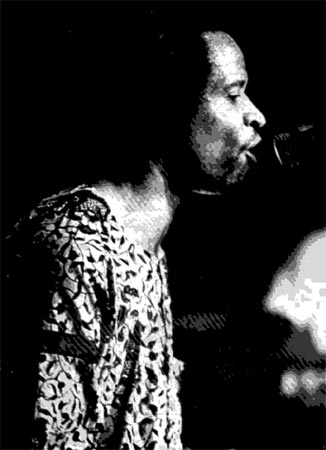
Musician Philly Lutaaya (photo source)

A friend of mine from Uganda sent me this. I thought I should share it... I agree. DO take a listen...
There was a popular Ugandan muscian called Philly Lutaaya. He went to exile in Sweden in 1979 and returned to Uganda in 1988 to a hero's welcome. Unfortunately he soon discovered he had AIDS. This was a time when most people across the world were still ignorant about the disease. To create awareness, he asked for his last days to be filmed and a wonderful 2 hour documentary of him was shot by the Swedish Red Cross. It was shown in many countries to create Aids awareness.
Philly was an incredible musician, one of my favourite songs that he did before passing on in 1989 was titled "voices are crying". This song is about the suffering of Africa's peoples at the hands of their leaders.
Do take a listen, the lyrics are trully moving http://www.youtube.com/watch?v=KgmgKQagFuA

Saturday, February 27, 2010

Letter from the Field: Questions for Leadership


Are we asking the right questions of our leaders?? (photo credit: Tim abbott)

One of my Indian buddies emailed me a set of thoughts this morning. Inspired by a post he read on someone's blog, he wondered about how well he knew his leaders. How well we all know our leaders...how we well we know our own leadership abilities.

His email really made me think. Parts of it proved to be an excellent questionnaire for myself (good prep for a job interview too!). Anyways, here you go...

Ask your Leader this.

Be it your Boss, your MP or you prime Minister... or yourself, if you
are a leader (we all play leader roles to someone or some people at
some or all times)
[from the blog of Lee Iacocca, the "king of straight talk"]
Wednesday, February 20, 2008
Demanding Answers
I’ve been thinking a lot about the Presidential race and the remaining
front runners. Last year, Katie Couric asked if we’d come up with some
questions, based on my latest book Where Have All The Leaders Gone?,
to ask the candidates.

Take a look at the following questions. Do you know any of the
candidates’ responses to them?

1. Leaders are not born; they’re made in times of crisis. Name a
crisis that you have faced, and talk about how you demonstrated
leadership.

2. Name your two primary models for leadership from the past 50 years.
These are the individuals you call to mind when you’re faced with a
tough decision.

3. The ability to collaborate with those who have different ideas and
approaches is a key factor in leadership. Give an example of a time
(professionally or politically) when you have successfully
collaborated with people who have different views.

4. As a businessman I learned that the best way to fully understand
what it means to be responsible is to meet a payroll every week. In
your life, when have you had tangible responsibility for the
livelihoods of others – and what did the experience teach you about
leadership?

5. Being President is not a one person job. The team is just as
important. Are you prepared to tell voters who will be on your team so
they can make an educated choice? In particular, who are your
candidates for Secretary of State, Secretary of Defense and Attorney
General? (If you’re not prepared to name them, can you name
individuals from recent history who have excelled in those positions?)

6. The United States has one of the lowest voter turnout rates among
democratic nations – especially for young single adults. What will you
do to encourage young people to vote and participate in government?

7. A leader inspires others to participate fully in the life of
democracy. The words of JFK – “Ask not what your country can do for
you; ask what you can do for your country” – still resonate. Give a
specific example of what you will ask citizens to do, and what
sacrifices you will ask them to make.

Maybe if these questions are circulated to millions by email (just
like the first chapter of my book), the tough questions will get asked
and the candidates will feel obliged to give the American people an
answer!

==============================
=========================


Made me think. How many of our Indian 'Leaders' in Politics can even
begin to understand these questions - let alone answer them.

But then again, how many of us in the corporate/business world - or
across any field of work for that matter - can answer these questions
about ourselves, or our "leaders"?


I for one, would love to ask these questions to a new brand of leaders
in governance and business shaping india's future...

cheers
P

Thursday, July 16, 2009

Pixar's work culture


Ed Catmull, President of Pixar, receives a Technical Academy Award. Below he speaks about leadership and managing Pixar's work culture (photo source: zimbio.com)

Following up on yesterday's post, here's more from Pixar president, Ed Catmull. In the video shown yesterday, Ed emphasized the importance of having a good team. In this interview, he elaborates further about what he means.

In case you can't watch the video, here is the essence of what he says and what Pixar strives to inculcate:
  • Cultivate an air of open and honest communication: The basic work culture at Pixar is that movie production is a team effort. Everyone is needed and important, and everyone has the right to speak and be heard. Ed says that the Pixar team works constantly on keeping communication lines open. There is also a significant emphasis put on trusting each other. This comes from attracting high quality people, and maintaining a high level of open communication.
  • Keep it egalitarian: Artists and engineers work together; one is in no way above the other. And it is management's job to emphasize this.
  • Keep your eye on the ball: At Pixar, the bottomline is making a good movie. Everything else is a means to that end.
  • Maintain your quality: Get the best people you know on board, as they will not only deliver a good product, but also bring in better talent.
  • Trust the artists: Ed strongly believes that the creative people need to drive the innovation, not the technical people or management. Given this high level of trust, the creative workforce works hard to include everyone else in their decisionmaking, and deliver a high quality product


If you are further interested in Catmull's take on running successful companies, I would also recommend watching this lecture that he gave at the Stanford Graduate School of Business in 2007.

Wednesday, July 15, 2009

The Pixar Story


photo source: solarnavigator.net

Pixar is pure magic and genius. It is the Walt Disney Company for the 21st century.

I've been reading the Pixar Touch (which I highly recommend) that gives the whole story of a group of visionaries whose visions were nearly killed several times. This lecture/panel discussion with the founders and main leaders in Pixar gives a great behind-the-scenes look at what makes the Studios tick, and what their recipe for success is (hint: people, people, people).

Wednesday, July 1, 2009

The inefficiencies of aid: Donor Denial and lack of educated input

A constant question I'm asked is why international aid is SO inefficient. There are many answers to this question. Here's one reason...donors, who generally live very different lives from the poor, don't seem to know the difference between people who know what they are doing and those who don't.

I was reminded about this again just recently, when a good friend of mine (let's call her "Anita") got fired recently. Yes, everyone's getting laid off these days, but this was sad. Anita was the perfect person for the job she was working on. While no one can still point a finger at her work quality (against all odds, she put together a stellar work product), Anita fought hard to improve the system and then got fired.

I had met Anita on a field job in India. She immediately struck me because she was strong, fearless, smart as hell, and had a mind of her own. Growing up in a village in India, it was big dreams, hard work and determination that brought her to where she is now---well-educated, traveling the world, helping poor communities everywhere. She hasn't stopped dreaming; and I hope she will never stop.

Anita's story is almost typical of other people I know who are struggling to honestly and honorably correct flawed systems. In her latest job, she was working for a group of Americans who were trying to expand their work into India. Working out of a NY office, the team scarcely knew what they were doing (this is a common theme among donors btw!! They assume that their way is the way of the world!). Considering the short time-frame, Anita, the lone Indian in the group, desperately called attention to the coming pitfalls and warned the team against their delinquent behavior. I remember her working long hours everyday for several months trying to lay the foundation because there were just TOO many mistakes. One day after months of frustration, she threatened to step down if they didn't change their behavior. Instead of acknowledging her work and her guts, she was promptly sacked and replaced by a 23 y/o American who blindly did what she was told. Anita's boss is a powerful and well-connected man within the donor community. And he has proven to be vicious in terms of wielding his power to sideline her.

The project is still going to be a success, because Anita laid such a great foundation and the organization already has a great reputation. But its ridiculous to me that a team of 5 Americans are trying to run an Indian project while based in the US; each of who has visited India once in their lives to see the Taj Mahal. The locals they have working with them say nothing because they are getting paid in dollars, and they are just happy to have jobs. So there you have it...inefficiency perpetuating itself over and over again.

Wednesday, June 10, 2009

The Case for Idealism...an Ode to Idealists!


Three young idealists, who blew away their competition: (L-R) Gandhi, Obama with his high school basketball team, and Walt Disney, all in their teens.


I often wonder about the difference between great idealism, great ambition, and great stupidity. It is a fine line indeed. Idealism has always been scoffed at. But where would we be without it?? Failed idealism is often termed as stupidity. But is it really??

I like the quote "Aim for the moon; if you miss it, you will still land among the stars." It is only when you aim high that you can soar high.

George Bernard Shaw once famously said, "The reasonable man adapts himself to the world; the unreasonable one persists in trying to adapt the world to himself. Therefore all progress depends on the unreasonable man."

And indeed so. Its very easy to forget that the people who have been the greatest visionaries were also termed as idiots and idealists. While everyone now might laugh at the thought, Americans have been quick to forget that the president they now adore would not have been but for a healthy dose of idealism on his part. Barack Obama for all given purposes had no business even thinking he would be President. He was of mixed parentage, with a white mother and African (different from African American) father; grew up in Hawaii (a state that has produced zero presidents before this one) with no proper religious background; had a muslim middle name sandwiched between strong Kenyan names; had a Harvard degree, no military service, very little public service, and was of modest means. Add onto that, that he was running against a Clinton. Yet he ran, and he won. And hopefully, he will be the change we all want to see among leaders of our world.

Speaking of "be the change," think of Gandhi, a softspoken, slight Indian man who thought that he could take down the mighty British empire, with a grand total of, well, no weapons. Even fist fights weren't allowed!! If he had told you in the early 1900's that the non-violence movement would not only encompass India and topple the British empire, but bring civil rights to African Americans in the US, reverse apartheid in one of the most racist regimes in the world - South Africa, bring the Chinese military to its knees in Tianenman Square, and become the mainstay of EVERY modern demonstration in the world, you would have laughed!! Many did; yet all those things happened and the movement still endures.

A few days ago, I found myself in another mecca of idealism - Disneyland. Riding some of the rides I had loved as a kid, I was struck by how timeless they were. Disney was SO ahead of his time. To think that much of Disneyland and Disney World's layouts have scarcely changed since they were built, inspite of the massive changes in technology in the recent past; that the most popular rides then still endure, and they continue to "make dreams come true" everyday is mindboggling. I'm sure if Disney had told you in the 30's that people would pay an-arm-and-a-leg to watch talking robot animals in the 21st century, we would have laughed. Yet here we are, years later doing exactly that.

Probably the biggest and powerful idealists are parents and teachers - moms, especially.

I think we need more idealism. Balanced with pragmatism, an unrelenting idealist with clear vision is capable of great change. Rather than laughing at them, maybe we should support them with our pragmatism. That while they soar high, we can be the tails on their kites to guide them, while also enjoying the ride.

Here's to the idealists amongst us!!

Friday, April 3, 2009

What Africans think about Aid-III

Following on the heels of Andrew Mwenda's talk, and Jen Brea's excellent article, I wanted to post this last talk by George Ayittey , who had set the tone for the conference in the first place. I would highly recommend browsing through the entire collection of excellent TEDAfrica talks here, and look at Ngozi talks for example. Be prepared to open your mind:


Tuesday, March 17, 2009

A wave of change is sweeping through the world


A wave of change (hopefully for the better!) is sweeping through the world; I am sure of it.

At home, a newly minted president taking over from pathetic, lackadaisical leadership stood up for the hardworking people of our country. I can only hope that other leaders of the world begin to take their lessons from him.

In a remote corner of the world, the new president of the Maldives, also taking over from bad leadership, told the world that Maldives would be carbon neutral by 2020, the first country to do so!

And only a few months ago, Bhutan's king of 30 years stepped down early to crown his 28-y/o son in power while also ushering a new move to democracy. The younger king has spent quite a bit of time abroad, including his education at Oxford and has a much more global ideological vision for moving his country forward.

And then this...I do hope that this change is also for the good...

Not sure if you heard about the coup that took place in Madagascar over the past 24 hours. But I've been following the news and been worried. SO little is known in the western world about the politics of this small island nation. I have been in regular contact with a friend of mine, based there and was quite concerned for his safety. A month ago, when we met in Los Angeles, he seemed depressed and worried about the chaos in his motherland. This morning, after a frightful 24 hours, we heard from him. This is what he had to say.

Yes, the former president was a normally good president after being elected...; but then, he got "high" on his almost unlimited powers and used it against the madagasy people´s interest.
[for example, the former president has been responsible for]:
  • selling...all the fertile land in Madagascar for 99 years [author's note: he is referring to land leasing laws that the old government has put into place]
  • the monopoly of numerous businesses for private interest.
  • the small farmers' desolate situation caused by shameless overall control of business opportunities by people with big political and economic power (on this subject there should be written a book, title: THE ORIGIN OF OUR POVERTY).
  • the mishandling of microcredits in Madagascar, in cooperation with international banks, who discovered 36% interest rates(!!) and people take it because they have no choice! Local banking institutions who want to give out domestic savings for less than half of this interest rate, are not allowed to!
  • the [mishandling and privatization] of natural resources for [private gain]
  • the suppression of democratic opposition and free media (imprisonment of opposition leaders, close dawn the tv channel, eliminate free speech and fire even too liberal cartoonists)
...these and many other political and economical phenomena, mixed into presidential powers, are the avoidable cause of the misery of our people in this moment.
THERE IS CERTAINLY NO EXCUSE FOR ANY KIND OF VIOLENCE [but there isn't an excuse for his] imprisonment of the opposition leaders, or for shooting instead of dialoging. And please let us try to put things cronologically right: the dialogue was refused and then the protesting started!
Today is a big day for me , my family and my kids => the end of Ravalomanana dictatorship in Madagascar ( He owned everything in our country and it have to stop) CHANGE

I don't know the future, and what will be happen tomorrow, but please pray for us to have a wise president who will think of the interest of the malagasy people and Madagascar which is one of the poorest countries in the world today.

I am safe and I am free and I am happy. Thank you for your love and support!

Tuesday, March 3, 2009

Become a PopTech Fellow


Become a PopTech Fellow and learn various skills from the best in the business (above an exercise in digital storytelling at the Fellows' conference. photo: Kris Krug)

PopTech is another phenomenal conference that brings together eclectic thinkers and do-ers for a three-day conference in Maine, New England, in the Fall. I've heard many people describe it as the "quaint TED." In my opinion TED is very big...1500 people in a single room is a LOT at any given time, so I would encourage you to also look at PopTech.

PopTech has an excellent Fellows program as well. I know a few of the Fellows and they have spoken very highly about it. As with TED, the PopTech Fellows' Conference precedes the main conference, and is a 3-4 day crash course in bonding and getting things done efficiently. The quality of people there is EXCELLENT...atleast what I have seen of them.

Here is a glimpse into the PopTech Fellows Program.


Apply here.

Saturday, April 12, 2008

The Schweitzer Fellowship for health professionals

Another of the blogs I follow regularly is one written by Paul Levy, President and CEO of Beth Israel Deaconess (BID) hospital in Boston, MA. BID is one of the most respected medical centers in the country.

I first met Paul in 2005, when he was part of a panel of speakers talking about leadership. Paul stood out because he was, by far, the most effective. He was clear, concise, and laid back. He spoke simply, so that you didn't feel stupid, and had a very encouraging manner. At one point he said that he learned everything he needed to know about leadership from coaching his daughter's soccer team. I'd encourage you to read his blog, particularly if you are interested in public health, medicine, and/or leadership.

Today he wrote a great post about the Schweitzer Fellowship, that financially supports a variety of budding health professionals in their studies, provided they dedicate atleast 2000 hours of community service in return. You can read all about it here.