Showing posts with label pollution. Show all posts

Tuesday, October 20, 2009

Question from a reader: Fixing water filtration in India


A simple sand and activated charcoal filter ($10-15) can filter hundreds of gallons of water simply and cheaply. But will this solve India's (bottled) water issues?? Read on... (photosource: bethechangeinc)


I got the following question in my inbox recently. Its becoming a question of increasing frequency, and I want to address it properly. Here's the "question" the reader wrote:

Last year, after a research expedition [on the effect of plastics on the environment]...we were giving talks and meeting with legislators along the way [in North America].

At one of our talks, a woman who had just returned from a long trip in India approached me, and said, "this is all great what you guys are doing to educate people, BUT there are much larger problems with plastic bottles and waste overseas". She told me that due to poor sanitation, in some areas she'd been in, people had no choice but to drink out of plastic bottles, and lacked the infrastructure to deal with them.

Which made me wonder if bringing water filtration systems to India might make a difference, albeit small.... for peanuts here ($500-$1000), an entire school can have clean water.

I've never been to India, but would be interested to hear your thoughts. Perhaps we might try to raise money for a few filters, to start with...

Here was my response:

I agree with the bottled water issue. As much as I detest bottled water, I find that when I'm in the developing world for very short bursts (where I don't have the time to purge my system and adapt) and need reliable, safe water quickly, I rely on bottled water (note: I try to drink tea, boiled water, other boiled beverages or soups for the most part, and only eat fresh, cooked food. Bottled water is a substitute when I can't find these or its simply too hot!). Amongst poor communities, plastic bottles are a huge commodity. Recycling goes on in full, plus the thicker, better bottles are used as water bottles or to store other liquids. They use these for several reasons -- convenience, cost (free to find, recyclable when they are done, easy to replace), how light it is, how sturdy it is, its lack of brittleness, etc. And yes...often they have no other choice.

Water filters are available in abundance in most of the developing world, particularly in non-disaster zones. India has a lot of indigenous water filters that do a very good job...most selling for around $50-$100. Most middle, upper, even poorer class Indians have them installed in their houses, though the best and most effective need access to electricity (they are RO systems). If you really want, you can build one using sand and a large bucket (or see diagram above). This is how most wastewater is treated in the US, though on a much larger scale. Clear water combined with some bleach dosing (aka chlorine disinfection), should render perfectly safe and drinkable water, and all for less than $10.

Probably best of all, there is always the option of boiling...the problem with this is that its very energy intensive and if you use wood/charcoal/kerosene, its simply too expensive. (I tend to boil my water usually in the developing world, except when i've run out of my supply and then use the water i find either at a tea shop or i buy bottled water).

Sometimes its not the filtration that's the problem....its the sourcing of clean water, the collection, the transportation, and the storage of water that are the biggest issues. Outside of the sourcing issues, plastic generally fills these voids.

Of course, for problems like arsenic, fluoride, salinity, etc, where you need more advanced cleaning, or where the water is extremely turbid (cloudy or visibly dirty), it becomes a different issue. These are very regional issues, and generally you can figure out what the biggest water problems in that area are by visiting the NGOs, doctors or govt public health agencies in that area. If its pathogen-related (which is the majority of water quality issues), then generally some proper boiling or filtration/disinfection will quell the problem. But other issues need more specialized solutions.

Finally, I'm not a huge fan of transplanted filters or other mechanisms. Filters from here are not made to withstand water or field conditions there. Expensive systems have a short shelflife, then like every other good transplant, they wither and die. This is partially because there is no one to do regular operation and maintenance, or who has been trained properly to fix even the smallest problems. A COMMON problem is letting untrained hands take over the operation of a technology. Their curiosity gets the better of them, and the technology is quickly rendered useless. Replacement parts are hard to find and buy, and the issue of untrained hands repeats itself. Always look for indigenous units, you are much more likely to have success in terms of adoption, operation/maintenance, and replacement if necessary.

These are my immediate thoughts on the subject. I'm always happy to discuss this further with you...

Thoughts anyone??

Thursday, April 30, 2009

A lesson in environmental law


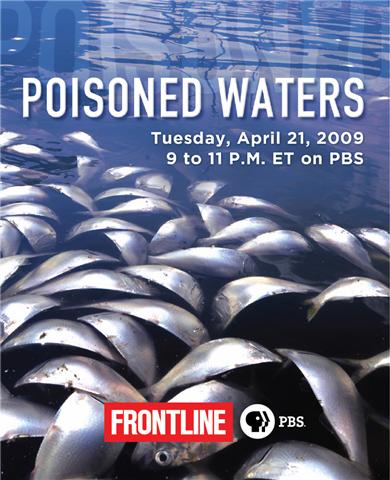
Frontline, a documentary series that discusses current affairs, recently did a brilliant documentary called Poisoned Waters (you can see it in full here), which outlines the U.S's long and difficult fight against pollution. It outlines what pushed the Clean Water Act (a landmark anti-pollution act) that forced polluters to become more responsible, the establishment of the EPA (Environmental Protection Agency - essentially our pollution control board), and much more.

If you want a history of environmental law in the United States, then DEFINITELY watch it.

But probably most importantly, people from the developing world NEED to watch it too, because this tough regulation on polluters in the US is what started the push to outsource these pollutants and polluting industries onto emerging and third world economies. Also, the developing world has the chance to step up and not make the mistakes, we in the first world have already made.

I think that's the key. Developing and emerging economies are at a point of bypassing, surpassing, and innovating beyond the first world to be EVEN better. Rather than complain about what they don't have, they should take the chance to challenge themselves to learn from our mistakes and do it even better.

Here is a sneak peek:

Saturday, April 12, 2008

Water Pollution: The Great Pacific Garbage Patch

An oceanographic vessel saw a giant unending patch of garbage floating around in the middle of the ocean. This is very much a current topic and provides a good idea of water pollution and how it happens.

This post includes a video of people who actually sail out to check it out for themselves.

http://www.treehugger.com/files/2008/04/great-pacific-garbage-patch-trash-vortex.php

Thursday, April 3, 2008

Water 101: Contamination


Little indigenous kids play in a pond just by an oil field in Venezuela. It is highly likely that the water is contaminated with oil and oil drilling chemicals.
source: Raphael Millan


In the previous Water 101 post, we covered what the water problem is - that there ultimately isn't that much potable (drinkable) water available for us. Really, the problems were accessibility (how to get water) and availability (amount of water available).

So how do we solve these??

Well, infrastructure is a major part of it. Infrastructure is the whole piping/plumbing system that gets water out from where the water is to where people are (usually animals and other plant life naturally go to where the water is...its the people that cause problems). So maybe we should improve water infrastructure and that would solve the problem.

Well, only partially...

Because there is the larger issue of contamination. It doesn't matter if we have the piping, if the water being piped is dirty. So let's start with understanding contamination.

How does water get contaminated??

Webster's dictionary defines contamination as "The process of...being made impure or unclean." So water that is made impure or unclean is contaminated water. Water gets contaminated in two ways:

1. Natural Contamination: This means contamination from non-human involvement. The thing is, all life needs water to survive. This includes pests like mosquitoes, and germs like bacteria, viruses and protozoa that are bad for us, who also go and live in the water. They make it impure or unclean for us causing a range of waterborne diseases like diarrhea and dysentery or water-related diseases like malaria, etc . Another way that water gets contaminated naturally is with high mud content (aka turbidity), salts, and minerals that the water picks up when it lands on or travels through the earth. For example, the soils in parts of South Asia and Africa naturally have very high amounts of arsenic and fluoride, which the water picks up when it is traveling through. These high levels of arsenic and fluoride can make people very sick. Or coastlines generally have a high rate of salinity (salt) in the groundwater, which makes it non-potable (drinkable).


Left to Right: man with advanced skeletal fluorosis[1]; girl with dental fluorosis. Both are caused by excess fluoride in drinking water[2]. Woman with acute arsenic poisoning [3]. Water with high mud content (turbidity) [4]


2. Artificial (man-made) Contamination: This type of contamination is primarily human-induced. Dumping chemicals or waste from industries and homes, as well as overdraining the water table can severely contaminate the precious water resources we have. There are far too many examples of this, including the stories highlighted in the award-winning movie, Erin Brockovich. One of the examples that really (in my opinion) brought industrial water poisoning to light was what has been known as the Minamata Tragedy, where mercury poisoning caused a series of mysterious illnesses. Other examples include the Mono Lake's increased salinity, caused by excessive draining of the lake and its feed rivers.


From L-R: Factory dumping in Minamata [5]. A sign we are all too familiar with, one that indicates polluted water [6]


A common mistake people make, particularly in communities with lesser education, is that they think contamination can be seen or tasted. But this is not the case. Most contamination is not visible to the human eye. For example, water with high fluoride, arsenic, bacteria or viruses, for example, can look just like regular purified drinking water. This is because the particles are so small that they can only be seen under a microscope or with testing in a lab. It is also important to note that its the concentration of these (generally measured in ppm or parts per million, as in parts of dirt per million parts of water) that can be lethal. It is generally safe to assume that water you get from an open-water source (like a lake, stream, river or pond) is contaminated. You definitely need to decontaminate these (we'll talk about decontamination in the next post). Groundwater is generally clean. I say generally because if it has been exposed to air or touched contaminated surfaces, or has mineral contamination, then its still not fit to drink.

Next time (and finally), we'll get into decontamination. And then I can show you all the fun technologies I've been storing up...

sources:
[1]: www.assam.org
[2]: www.unicef.org
[3]: http://www.martiinc.com/arsenic.htm
[4]: http://www.lenntech.com/turbidity.htm
[5]: credit: W.Eugene Smith
[6]: credit: William Hartz